OrbitPi DocAI
AI document OCRInvoices, bank statements and forms into clean, checked data.
- Upload, email and watched-folder intake
- Format, arithmetic and line-item checks
- Excel, CSV, S3, SFTP and webhook output
OrbitPi Inventory · Warehouse inventory management
OrbitPi Inventory keeps stock by warehouse, bin, batch and owner, with barcode scanning and valuation by FIFO, moving average (AVCO) or standard cost. GST documents for India sit in a separate India module.
What OrbitPi Inventory does today, feature by feature.
Model each warehouse as zones and bins, generate racks in bulk, block bins when needed, and see stock on hand by exact position.
Receive against purchase orders or without one, record ASNs and dock appointments, flag short and excess quantities, and inspect quality before stock is released.
Track lots, serials and pallets with full traceability, filter near-expiry stock, allocate earliest expiry first, and quarantine a recalled batch in place.
Reserve stock for orders with FIFO, earliest-expiry or named-lot rules, pick in waves, and verify every pack by scan.
Scan-driven screens understand carton and pallet barcodes, read GS1 supplier labels, and print labels on Zebra (ZPL) or PDF printers.
GSTIN profiles, HSN and SAC masters, delivery challans per branch series and the full e-way bill lifecycle. Dispatch is blocked until the e-way bill is active.
A blind cycle count hides the book quantity until submit. Freezing stores that book figure. A line outside tolerance waits for approval, and a recount keeps the original line. Valuation is FIFO, moving average (AVCO) or standard cost per category and site. LIFO is not offered.
Role-based access by branch and site, maker-checker approvals, and a tamper-evident audit trail of every stock movement.
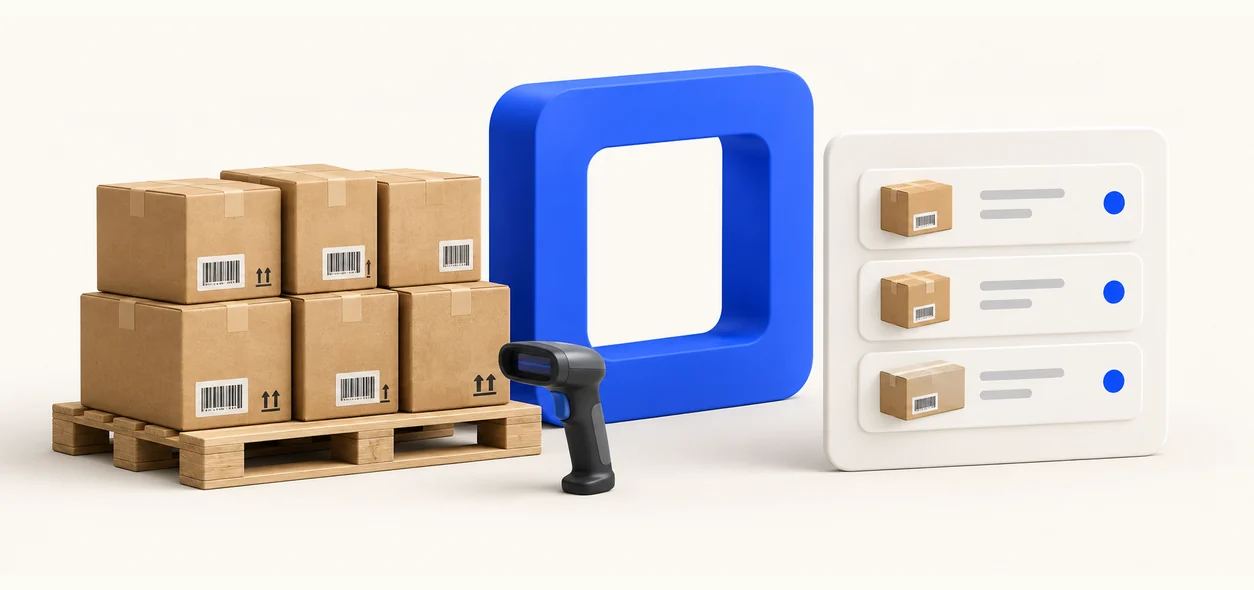
Goods are received against a PO, inspected and recorded on a GRN.
Rules suggest the right bin by temperature, capacity and velocity.
Reserved stock is picked, packed by scan and shipped with its dispatch documents.
Blind counts reconcile stock and valuation stays current.
Run several warehouses and branches with one view of stock, value and ageing.
Keep an owner on every stock line so each client’s inventory stays separate.
Control batches, expiry dates and recalls from receipt to dispatch.
Relevant industries: Manufacturing, Distribution, Logistics & 3PL, Retail & e-commerce, Healthcare & pharma
Get data in and out with the tools you already use.
Generate, update, extend and cancel e-way bills, and create e-invoice IRNs for branch transfers.
Named API clients with rotatable keys, and signed webhooks for stock events.
Twelve label and document templates, routed to the right printer.
Bring in opening stock and masters from Excel, with validation and undo.
Use a representative sample of your work to check fit, setup and outputs before choosing a product.
Bring a stock sheet with warehouses, bins, items and units. Include batch, expiry or serial details where needed, then review how opening quantities and user access map to your locations.
Use a sample purchase receipt and customer order to walk through receiving, putaway, allocation, picking and packing. Check a shortage or return as well as the normal flow.
Review the labels, browser-based scanners and print formats your floor team uses. In India, discuss the compliance-provider setup for e-way bills, and compare valuation exports with your accounting workflow.
Compare single-product and suite options on our software pricing page, or talk to the OrbitPi product team about your requirements.
It is software that tracks stock quantities and locations inside one or more warehouses and manages the work that moves stock, such as receiving, put-away, picking, packing and counting.
Yes. You set up each warehouse with its own zones and bins and see stock by position across all of them, with transfers between warehouses tracked as send, in transit and receive.
Yes. OrbitPi Inventory tracks lots, serials and pallets with forward and backward traceability, filters near-expiry stock at 30, 60, 90 or 180 days, and can allocate the earliest expiry first.
Yes. For businesses in India, OrbitPi Inventory handles the e-way bill lifecycle through a GST compliance provider, including Part A and Part B, vehicle updates, extension, cancellation and consolidated bills. Dispatch is blocked until the bill is active.
Yes. Receiving, picking, packing and counting screens are driven by barcode scans in the web browser, and OrbitPi Inventory recognises carton and pallet barcodes as well as GS1 supplier labels. A dedicated handheld app is not available yet.
The costing methods are FIFO, moving average (AVCO) and standard cost, set per item category and site. Serial-controlled items take cost from that serial’s own layer. LIFO is not available. Landed cost and revaluation are separate value movements, and valuation can be reported as at a date.
Each stock line has an owner, so client stock can be held and reported separately. When the 3PL module is enabled, versioned rate cards, SLA records and billing runs are included. A run prices metered events and stops if an event has no rate. It does not issue the tax invoice; it prepares an accounts-receivable handover. Client portal access is a permission limited to that client.
Invoices, bank statements and forms into clean, checked data.
Capture, route and follow up every enquiry on time.
Tag, assign, maintain and verify every asset.
Bring a sample invoice, stock sheet or lead list. We’ll run it live in a 30-minute demo.
Book a demo